Ayers Rock, also known as Uluru, is one of Australia’s most famous natural wonders. In the middle of Central Australia, it rises out of the desert like a giant monolith and attracts visitors from all over the world to see its beauty. But have you ever wondered why Uluru is so red? In this post, we’ll look at the geological and environmental factors that make Uluru red, its importance to the Aboriginal people and how the rock fits into the bigger cultural landscape of Uluṟu-Kata Tjuṯa National Park.
Uluru tours allow visitors to see the rock and the surrounding landscape and get a deeper understanding of its geology, cultural significance and the spiritual connection the Aṉangu people have with this sacred site.
The Geology of Uluru

Uluru is made of arkose, a coarse-grained sandstone. Sandstone is made up of mineral grains, mostly quartz and feldspar. What makes Uluru’s arkose unique is its high feldspar content. Feldspar is a mineral that contains iron oxide (essentially rust) naturally, and when exposed to the elements, it oxidises and gives the rock its red colour.
At first, Uluru’s sandstone would have been grey in colour, but over millions of years, weathering and oxidation have changed the surface. The deeper layers of the rock are still grey, but the outer layer, which is exposed to air, water and sunlight, has turned a deep orange-red. This is similar to other famous Australian landmarks like Mount Augustus and Mount Olga in Tjuta National Park.
The Role of Iron Oxidation
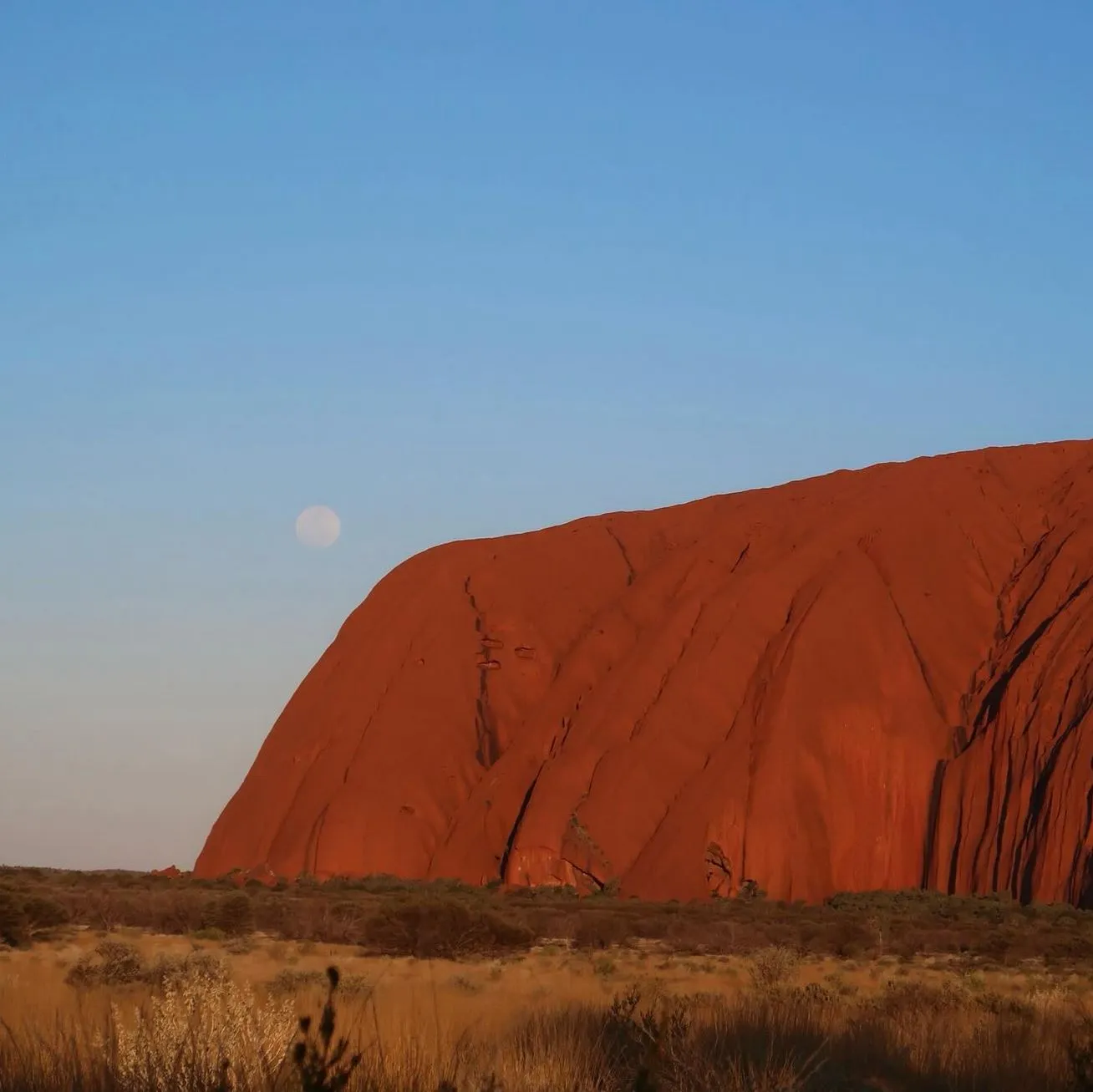
The main reason Uluru is red is oxidation. The iron in the sandstone reacts with oxygen in the air and rusts. This is called oxidation and is what gives the rock its red colour. As the iron oxidises it creates a layer of red-brown material on the surface of the rock. This is the same process that happens to metal when it’s exposed to the elements and rusts and forms the bright and beautiful colour that makes Uluru so famous.
The Influence of the Environment
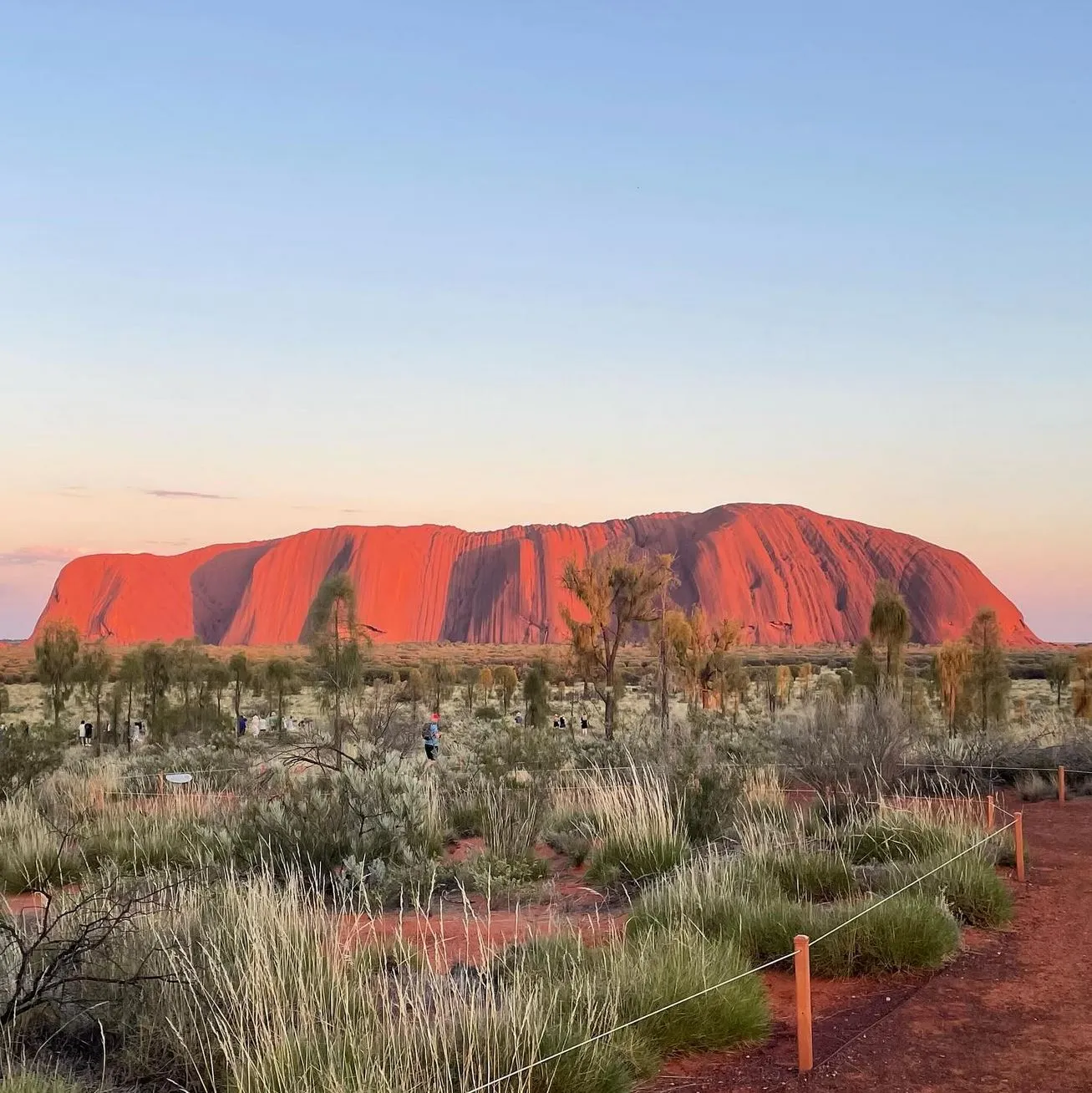
Uluru’s environment has a big impact on its colour. The extreme climate of Central Australia, with big temperature fluctuations and minimal rainfall, causes erosion and oxidation of the rock. During the day, the rock surface expands, and at night, it contracts as the temperature drops. This cycle of expansion and contraction, plus occasional rainfall, causes weathering, which speeds up the oxidation process and makes the rock redder.
The Australian desert around Uluru also has an impact on the rock’s colour. Uluru stands alone as a natural wonder in the middle of the vast Western Desert. The massive rock formation is subjected to wind and water erosion, which continues to shape it and its red colour over time.
How Does the Sun Affect Uluru’s Color?

One of the best things about Uluru is the way it changes colour throughout the day. At sunrise and sunset, the rock turns from orange to red and deep purple. Thousands of tourists visit every year to see it.
The colour change is because of the way the sunlight interacts with the iron oxide on the surface of Uluru. During the day, the sunlight hits the rock at a higher angle, and the red colour appears more vibrant. At sunrise and sunset, the sunlight has to travel through more of the Earth’s atmosphere, and this changes the light spectrum. This is what brings out the red, orange and purple wavelengths and the colour of the rock.
The Sacred Meaning

For the Aboriginal people, particularly the Aṉangu people, Uluru is a sacred site. The red colour is sacred, and the stories that go with it. The traditional stories that have been passed down through generations link Uluru to the creation of the Earth, the people and the animals. The rock formations, the caves and the ancient paintings in the area are part of the spiritual belief of the Aṉangu people and other Aboriginal people.
Uluru is an important part of Australian cultural heritage. As part of the Uluṟu-Kata Tjuṯa National Park, the rock is a key part of the country’s Aboriginal history. The park which includes other significant sites like Kata Tjuta (also known as the Olgas) is a cultural landscape that the Aboriginal people have lived in for thousands of years. These sacred sites are the key to understanding the connection between the Aboriginal people and the land, a living history that continues to shape the region.
Uluru’s Geological History
Uluru’s geological formation is around 600 million years old. It was part of a massive ancient sand fan deposited by wind and water. Over time, the sand hardened into layers of sandstone and other rocks and eventually formed the monolith we see today. The erosion over millions of years has brought the iron out of the rock, and that’s why it’s red.
Uluru is one of the biggest monoliths in the world. It’s 348 metres tall and over 9 kilometres around the base. The size and the colour make it one of the most unique and iconic natural wonders of Australia.
Environment and Culture
As a UNESCO World Heritage Site, Uluru is protected by environmental and cultural laws. The Australian Government and Parks Australia work to conserve Uluru’s natural and cultural values. Tourism infrastructure, such as accommodation and walking tours, has been carefully planned to have minimal impact on the environment and the site’s sacredness. Please respect the wishes of the traditional owners, the Aṉangu people, and don’t climb Uluru; instead, view from designated viewing areas.
Conclusion
The red colour of Uluru is the result of millions of years of geological processes, weathering and iron oxide in the feldspar. The outer layers of the rock have been turned red. The inner layers are grey. This natural wonder, combined with the cultural significance of the colour to the Aṉangu people, makes Uluru a sacred place.
Oxidation, weathering and sunlight all contribute to Uluru’s red colour. But beyond science, the colour change at sunrise and sunset is one of the most beautiful sights in Australia. For tourists, photographers and Indigenous communities, the red glow of Uluru is a powerful connection to the natural world and cultural heritage.
FAQ
Why is Uluru red?
Uluru is red because of iron oxidation in the sandstone, where iron in the rock rusts when it’s exposed to oxygen.
What is the geology of Uluru?
Uluru is arkose sandstone, which is high in iron minerals.
What is Uluru to the Aboriginal people?
Sacred site for the Aṉangu people, deep spiritual and cultural significance tied to creation stories and ancestral beings.
Can I climb Uluru?
Climbing Uluru was closed in 2019 to respect the Aṉangu people and the site’s sacredness.
How old is Uluru?
600 million years old. Formed from sedimentary rocks like arkose sandstone.